How to Check Vehicle History Before Buying a Car | Hexham Guide

How to Check the Vehicle History Before Buying a Car
DVLA MOT History: A Crucial First Step
To start, checking the MOT history is a must. The DVLA provides an online service that allows you to look up the MOT status of any vehicle instantly.
This service will show if the car has passed or failed previous MOT tests and give you the reasons for any failures. For example, imagine you're considering buying a car privately in Hexham. Upon checking its MOT history, you find out it failed a test two years ago for brake issues, but was repaired and passed in subsequent tests. This gives you peace of mind knowing that the car was properly maintained.
When considering a car with a valid 12-month MOT, it's important to understand the difference between failures and advisories. While an advisory isn't necessarily a deal-breaker, it's essential to assess whether the issue is minor or a major concern. For example, a car may have advisories like "the seatbelt could not be tested" due to baby seats being installed, which can prevent the tester from properly checking the seatbelt functionality. This is a relatively minor issue. However, an advisory such as "light misting of oil covering the engine" should raise a red flag, as it could indicate an impending oil leak.
HPI Check
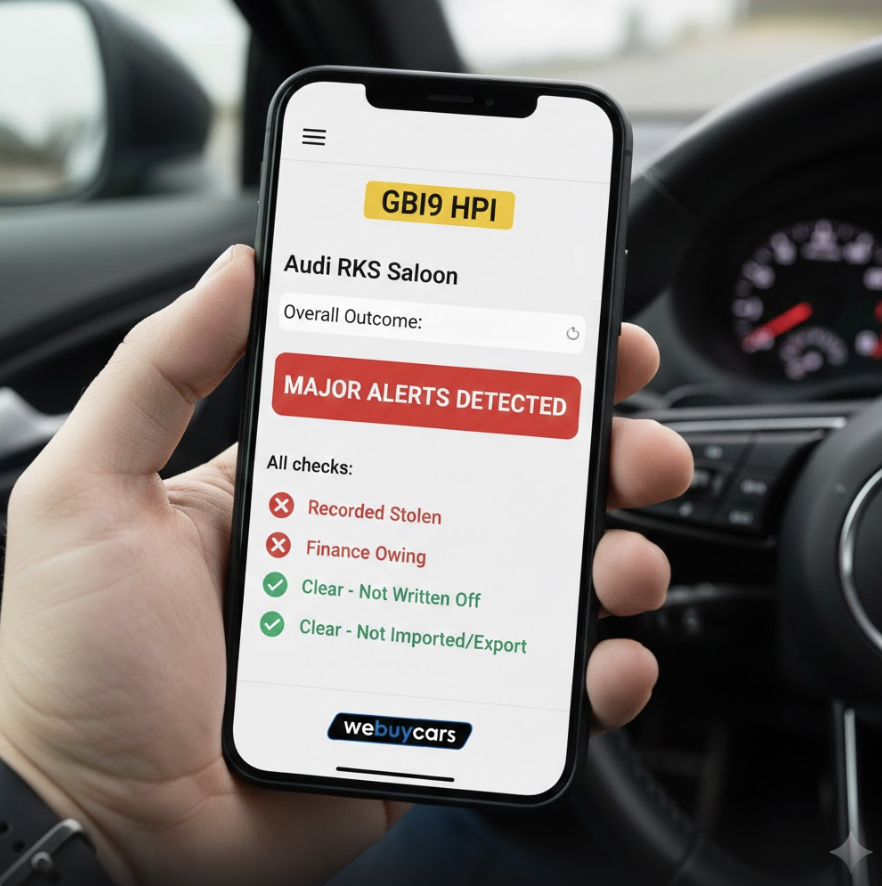
One of the most important checks is the HPI check, which provides a comprehensive history of the vehicle. This check will confirm if the car has been stolen, written off, or has any dubious history.
For instance, you might be looking at a used BMW 3 Series in Hexham, and an HPI check reveals that the car was previously written off due to an accident. This information allows you to make an informed decision—saving you from potential legal trouble or costly repairs later on. Insurance prices tend to increase with accident damage cars. Maintenance costs may be greater due to wheel alignment issues, unsecure panels.
An HPI check is an essential tool for anyone looking to purchase a used vehicle, as it provides key information about the car's history. These checks are typically color-coded for easy understanding: green indicates everything is clear and there are no issues, while red signals potential problems, such as outstanding finance or a history of accidents. Orange warnings fall in between, offering important details that may not necessarily be deal-breakers but still warrant attention.
For example, an orange warning might indicate that the vehicle has had a plate change, which could mean the car previously had a personalised number plate. While this isn't necessarily a red flag, it's something to keep in mind. Additionally, if the check reveals the car's origin as being outside the UK, marked by an orange import warning, this could raise questions.
Check for Outstanding Finance
You don't want to end up with a car that's still tied to outstanding finance, as it could be repossessed after you've purchased it. Ask the seller for confirmation that the vehicle is free from any financial obligations. If you're unsure, you can perform an HPI check that will also provide details on any finance agreements associated with the car. One recent case in Hexham involved a buyer who unknowingly purchased a car with outstanding finance, only to have it repossessed a few months later.
Buying a car with outstanding finance is a common scenario, but understanding the process is crucial. First, ask the seller to contact the finance company and request a settlement figure. This is the total amount required to pay off the loan, including any interest and fees.
Positive equity means the car's value exceeds the outstanding finance. The seller can pocket the difference. Negative equity occurs when the car's value is less than the finance owed. The seller may need to pay the shortfall to clear the debt.
If the loan is settled early, the lender may charge early termination penalties. These fees vary by finance type, so the seller should check if any apply. Once the settlement figure is confirmed, the finance can be paid off. Once the finance is settled, the car's ownership can be transferred, ensuring the vehicle is free of any finance. Understanding your finance options is crucial to avoid these complications.
Verify the Vehicle Identification Number (VIN)
The VIN is like the car's fingerprint—it uniquely identifies the vehicle. When buying a used car, ensure the VIN on the car matches the one on the paperwork. A mismatch could be a sign of tampering or fraud. For example, you might come across a Volkswagen Golf you would like to purchase in Hexham. If the VIN on the car doesn't match the paperwork, it could indicate that the vehicle has been stolen or altered. Always double-check to avoid such risks.
A few years ago, a buyer in the UK purchased a used car privately through an online marketplace. The HPI check came back clear, but when the buyer went to inspect the car, they noticed the VIN on the dashboard didn't match the one listed on the car's registration documents. After raising the issue with the seller, it was discovered that the car had been previously involved in an accident, and the original chassis had been replaced.
When checking the VIN, look in several key places: the logbook (V5C), dashboard near the windshield, chassis plate in the engine bay, driver's side door frame, and service history records. Cross-check the VIN you see in these locations with what's listed on the V5C and any other documents related to the car's history. They should all match exactly.
Examine Service Records: Why Double Verification Matters
A full-service history is a key indicator that a car has been well-maintained. Service records will give you an insight into the care the car has received over the years, including any major repairs. For instance, if you're buying a used Audi A3 in Hexham, the service history might show that the car has been serviced regularly at an authorized Audi dealership, ensuring its condition is top-notch. On the other hand, a lack of service records could indicate neglect, leading to more repairs down the road.
When reviewing service records and invoices, it's essential to check for key maintenance items like the timing belt, as well as potential issues like clocking. The timing belt is a critical component that controls the engine's timing, and if it fails, it can cause severe engine damage. Manufacturers typically recommend replacing the timing belt at specific mileage intervals, often between 60,000 and 100,000 miles, depending on the make and model.
Ensure the service book and invoices show that the timing belt was replaced according to the manufacturer's recommendations. If there's no record of it being replaced, this could lead to an expensive repair soon after purchase. Proper maintenance documentation protects both warranty and resale value.
Mileage Verification: Avoid Clocking Scams
Clocking, or odometer tampering, is the illegal practice of altering a vehicle's mileage to make it appear less used than it actually is. This can significantly inflate the car's perceived value and mislead buyers into thinking they're purchasing a more reliable, less worn vehicle.
Check the recorded mileage at each service interval in the service book and compare it to the current odometer reading. If there's a significant discrepancy, especially if the mileage is lower than it should be for a car of that age, it may be a sign that the odometer has been tampered with. Cross-reference the mileage shown in any invoices or receipts for work done on the car.
One significant issue when dealing with imported cars is that odometer tampering can be harder to detect, especially when the car has been registered in a different country first. Cars that come from countries like Ireland can have an added complication due to differences in MOT systems and registration practices. In Ireland, the MOT system is not as stringent as the UK's, particularly when it comes to recording mileage.
When an imported car from Ireland enters the UK, it gets assigned a new UK registration number. The car's mileage, however, might not be accurately reported during this process. Some dealers might exploit this gap by bringing in cars with altered mileages and registering them in the UK with seemingly "new" mileage figures.
The Fewer the Owners, the Better
A car with fewer previous owners is generally considered to have been better cared for. Multiple owners in a short period could indicate that the car had issues that led people to sell it. When considering a used car in Hexham, check how many owners it has had and assess whether the number aligns with the car's condition and price.
Consider a car with five owners in just two years. The logbook (V5C) shows ownership changes every few months, which raises concerns. By cross-referencing these dates, you can spot an unusual turnover, signaling potential problems.
A deeper HPI check reveals mileage discrepancies, possibly indicating odometer tampering; a severe accident that led to the car being written off and repaired, then quickly resold; engine issues that caused the most recent owner to return the car after just two months. This frequent change of ownership suggests unresolved issues such as mechanical failures, accidents, or unreliable repairs.
When you're ready to sell your car, single ownership with full service history adds significant value—something buyers actively look for.
Vehicle Recall History
Vehicle recalls are sometimes necessary for safety and reliability reasons. Check whether the car has been subject to any recalls and, if so, whether those issues have been addressed. You can find this information by researching the vehicle's registration number.
It is illegal for dealers to sell a car with an outstanding recall. The dealer must fix any recall-related issues before the car can be sold. While many recalls are free to fix, they often require you to take the vehicle to a main dealer for repairs, which can be time-consuming depending on the nature of the issue and parts availability.
Many car manufacturers have online tools where you can enter the vehicle's registration number or VIN to check if there are any outstanding recalls. When you perform an HPI check on the car, it will often include a section that highlights any outstanding recalls. In the UK, you can check gov.uk or other governmental websites that provide recall information.
Write-Off Categories: Don't Overlook Them
Before purchasing, it's also important to check if the vehicle has ever been written off. Write-off cars are often cheaper, but they may have hidden damage or safety issues. You can check the write-off category by reviewing the car's history report.
CAT S (Structural Damage): A CAT S car has experienced significant structural damage, often affecting the frame or chassis. While the car may have been repaired and is now roadworthy, the structural integrity might not be as strong as it was before the accident. CAT S cars typically see a 50% price reduction compared to similar, non-categorised cars.
CAT N (Non-Structural Damage): A CAT N vehicle has sustained non-structural damage, such as cosmetic issues or damage to parts like body panels or lights. While the damage may still have been significant, the vehicle's structure is generally intact. CAT N cars usually experience a 35% price reduction.
Not all CAT S and CAT N cars are repaired to a high standard. Some unscrupulous sellers may cut corners on repairs, which could affect the vehicle's safety and performance. Even CAT N vehicles can have hidden problems. Poorly repaired bodywork or unresolved electrical issues may crop up after the sale. Many reputable dealers avoid selling CAT S and CAT N cars, meaning you may have limited or no warranty coverage.
Most reputable used car dealers in Hexham prefer to sell cars with a clean history. Our transparent buying service ensures you avoid categorised vehicles with questionable repair histories.
Researching Common Model Issues
When buying a used car in Hexham, it's not just about checking the vehicle's history and condition; you should also do your research on the specific make and model. Each vehicle can have its own set of common issues, and knowing these potential problems before committing to a purchase can save you from unexpected repair costs down the line.
Ford Ecoboost Engines (Fiesta, B-Max, Focus): The Ford Ecoboost engines are popular for their fuel efficiency and performance. However, there have been reports of turbocharger failures, oil leaks, and coolant system issues. Some models have also experienced issues with the timing belt or timing chain, which can lead to engine failure if not addressed.
Land Rover Ingenium Engines: Land Rover's Ingenium engines, which power models like the Discovery and Range Rover Evoque, are known for their impressive power and efficiency. However, there have been reports of excessive oil consumption, timing chain issues, and EGR valve failures.
Volkswagen Dieselgate: Many Volkswagen diesel models were affected by the Dieselgate scandal, where the company was found to have installed software that manipulated emissions tests.
Ford PowerShift Transmission Issues: Some models with the Ford PowerShift transmission (found in Focus and Fiesta models from 2011-2016) have had a history of clutch failures, leading to jerky gear shifts and eventual transmission breakdowns.
Don't fall for common car buying myths—always research model-specific issues before purchasing.
Selling Your Car in Hexham?
At We Buy Cars Hexham, we provide full transparency when buying your vehicle. When you sell to us, we conduct thorough history checks and offer honest valuations based on complete vehicle reports. Get your free valuation in 60 seconds.