How to check the MOT history for free
The first check on any used car is the MOT history, and it is completely free. GOV.UK lets you pull the full test record with just the number plate.
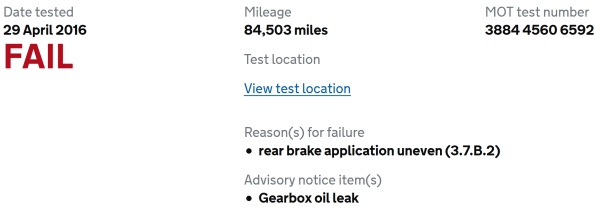
The record shows every pass, every fail, the advisories raised and the recorded mileage at each test. Line the mileages up in order. If the numbers stall, jump backwards or leap forward, you are looking at a clocked car.
Read advisories carefully. "Seatbelt could not be tested" because of a child seat is usually harmless. "Light misting of oil covering engine" or "slight play in lower suspension arm" is a warning that a repair bill is building.
The DVSA publishes the MOT database, so the mileage record is trusted across the trade. We check it on every car we buy at our Hexham forecourt before we make an offer.
What an HPI check actually tells you (and what it costs)
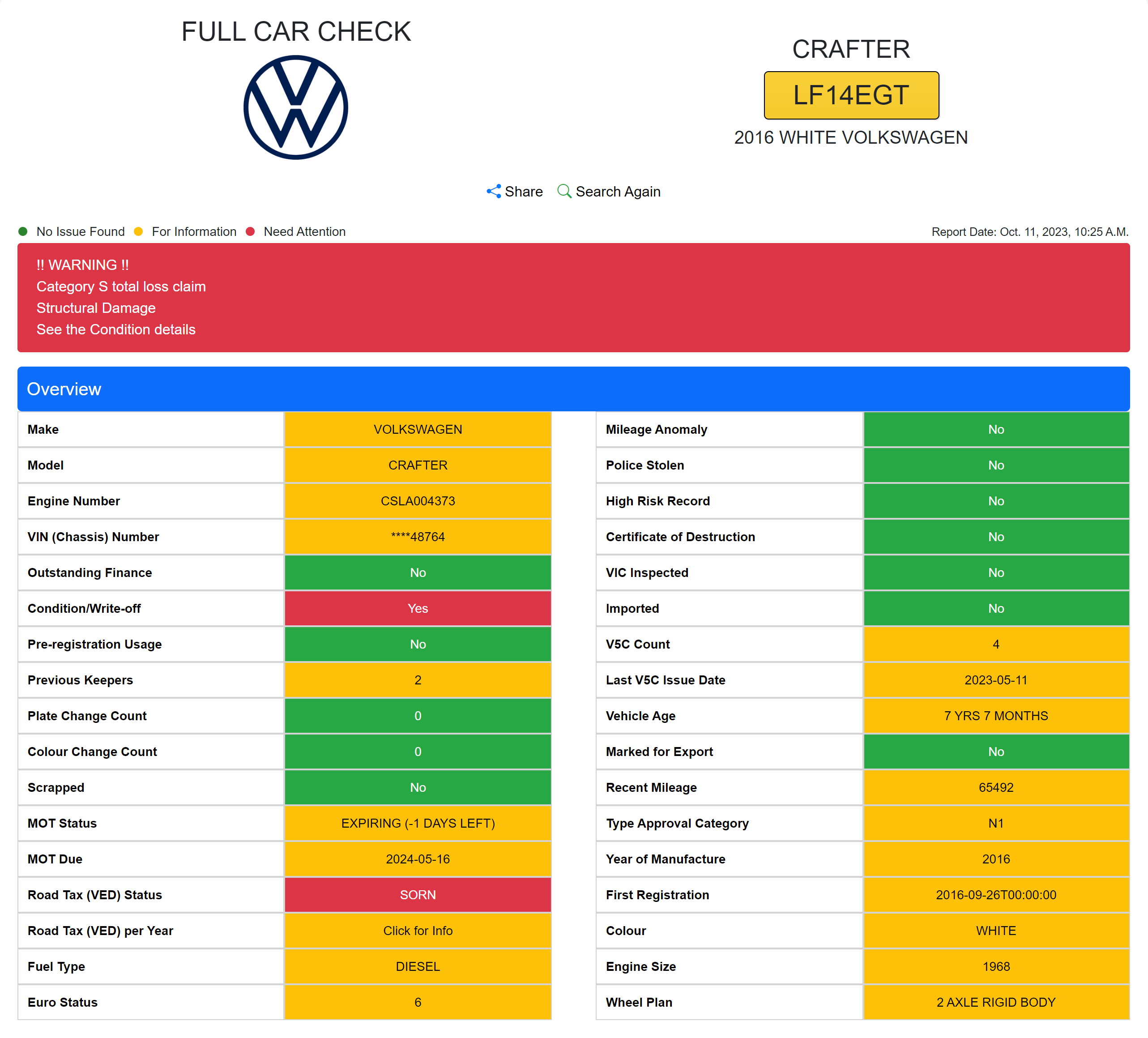
An HPI check is the paid layer on top of the free GOV.UK data. It covers the things DVLA will not tell you: outstanding finance, insurance write-offs, stolen records, number-plate changes and mileage anomalies.
Most reports are colour-coded. Green means the record is clear. Red flags an outstanding finance agreement, a write-off, a stolen marker or a serious mileage discrepancy. Orange is a soft warning, often a plate change or an import marker.
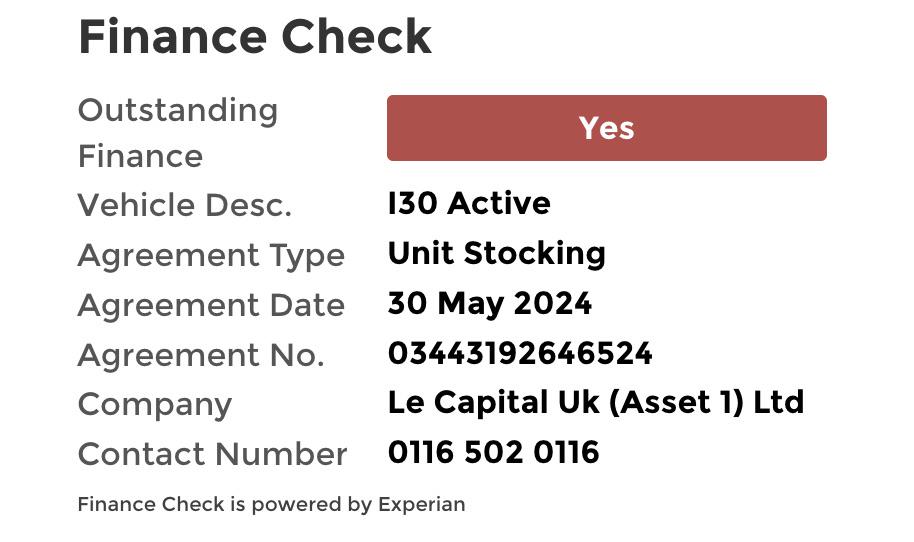
If the report comes back red for finance, walk away unless the seller can prove the debt is settled in writing. A car with a live finance agreement can be repossessed even after you have paid for it in full.
An import marker is not automatically a dealbreaker, but you should ask where the car came from and check the mileage record against the original country. Irish and European imports can be harder to verify because of differing MOT and service standards.
How to clear outstanding finance before you buy
Around one in four used cars on the road still has finance owing on it at some point. Buy one without settling the debt and the finance company can lift the car off your drive.
Ask the seller to call their lender and request a settlement figure. This is the exact number needed to clear the agreement today, including any early-termination fees.
If the car is worth more than the settlement figure, the seller is in positive equity and can pay it off with your money. If the car is worth less, that is negative equity and the seller has to find the shortfall themselves.
The safest way to buy a financed car privately is to pay the finance company directly for the settlement figure, then pay the seller the balance. Get written confirmation of settlement before the V5C changes hands.
How to check the VIN and spot ringing
The VIN is the car's 17-character fingerprint. Every VIN on the car and on the paperwork must match, character for character.
Check the VIN in at least three places before you hand over money:
- The V5C logbook
- The base of the windscreen on the driver's side
- The door shut or B-pillar sticker
- The chassis plate in the engine bay or boot floor
- Service book and any dealer invoices
A mismatch points to one of two things: a repaired car with a replacement bodyshell, or a stolen car with a cloned identity ("ringing"). Both are reasons to walk away.
Run the VIN through the free DVLA vehicle enquiry at gov.uk/get-vehicle-information-from-dvla. It will show tax, MOT status, make, model, colour, engine size and CO2. If the details do not match the car in front of you, do not buy.

How to verify service records and cross-check them
A full service history (FSH) tells you the car has been looked after on schedule. It typically adds around 5-15% to resale value, and missing paperwork pulls the same amount back off.
Do not just flip through the book and nod. Cross-check every stamp against an invoice, and every invoice against the MOT mileage record. Clocked cars usually show up here first.
Pay attention to the timing belt or chain. Most manufacturers specify replacement between 60,000 and 100,000 miles, or every 5-7 years. A missed belt can destroy the engine if it snaps, so a missing record is a price-negotiation point.
For newer cars, ask the seller to log into the manufacturer's digital service record. Audi, BMW, Mercedes, Ford, Vauxhall and Volkswagen all store services electronically, and digital records are almost impossible to fake.

How to spot a clocked car using free MOT data
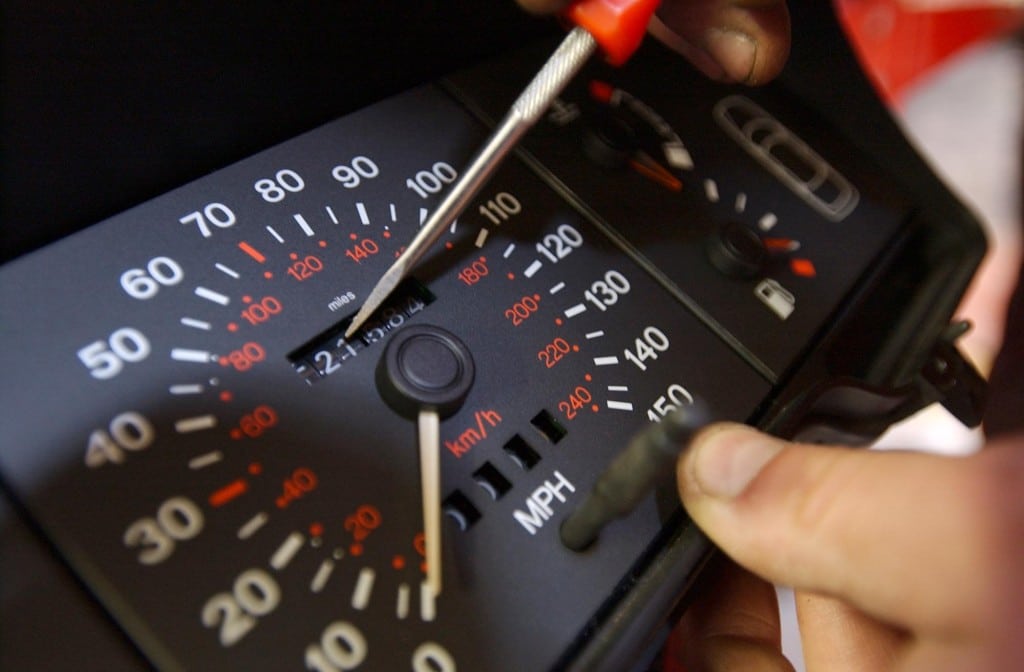
Clocking means winding the odometer back to hide mileage. It is illegal to sell a clocked car without disclosing it, but it still happens, especially through private classifieds.
The free MOT history on GOV.UK logs the mileage at every test. Pull it up, read the numbers in order, and look for any reading that is lower than the previous one. That is clocking, full stop.
Imports are harder to verify because overseas mileage records are not in the UK database. If the car is a recent import from Ireland or mainland Europe, ask for the original registration documents and any foreign service records before committing.
A typical UK car covers 7,000-8,000 miles a year. If a 10-year-old hatchback is showing 45,000 miles with no explanation, be sceptical.
What the number of previous keepers really means
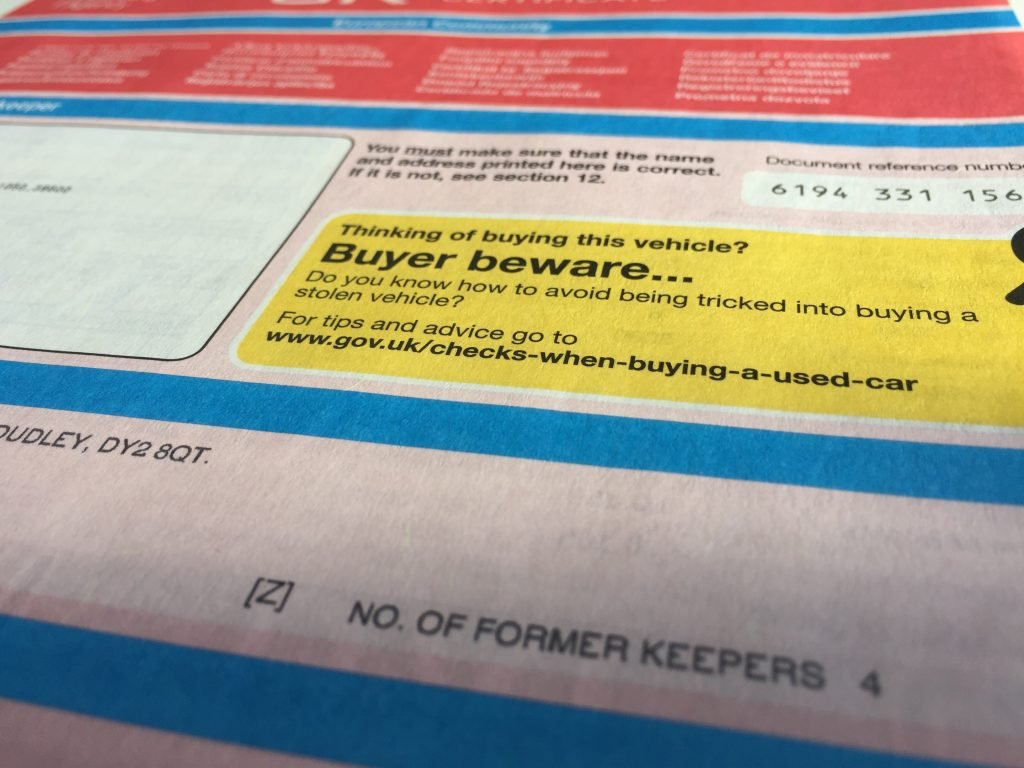
Every time a car changes hands, DVLA records it on the V5C. A long list of previous keepers is not automatically bad, but a rapid turnover is.
Five keepers in two years on a five-year-old hatchback is a red flag. It usually means someone bought the car, discovered a fault, and moved it on quickly.
Cross-check the V5C dates against the MOT history. If a keeper held the car for three months and the next MOT shows a serious advisory, you are probably looking at a car with unresolved mechanical issues.
When you are ready to sell your car, a low keeper count with full service history is worth real money. Buyers actively search for one-owner or two-owner cars.
How to check for outstanding safety recalls
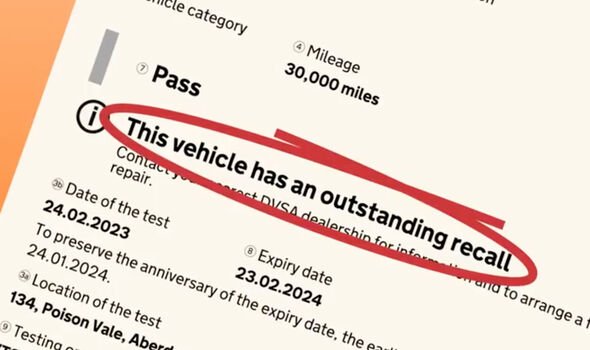
Manufacturers issue safety recalls when they identify a defect that could affect the car, driver or other road users. Recalls are free to repair at the main dealer, but only if you know about them.
The free GOV.UK recall checker at gov.uk/check-vehicle-recall lets you search by registration number in seconds.
Every manufacturer also runs its own VIN lookup. Enter the 17-character VIN on the brand's website and it will list any open campaigns for that specific car.
Insurance write-off categories explained
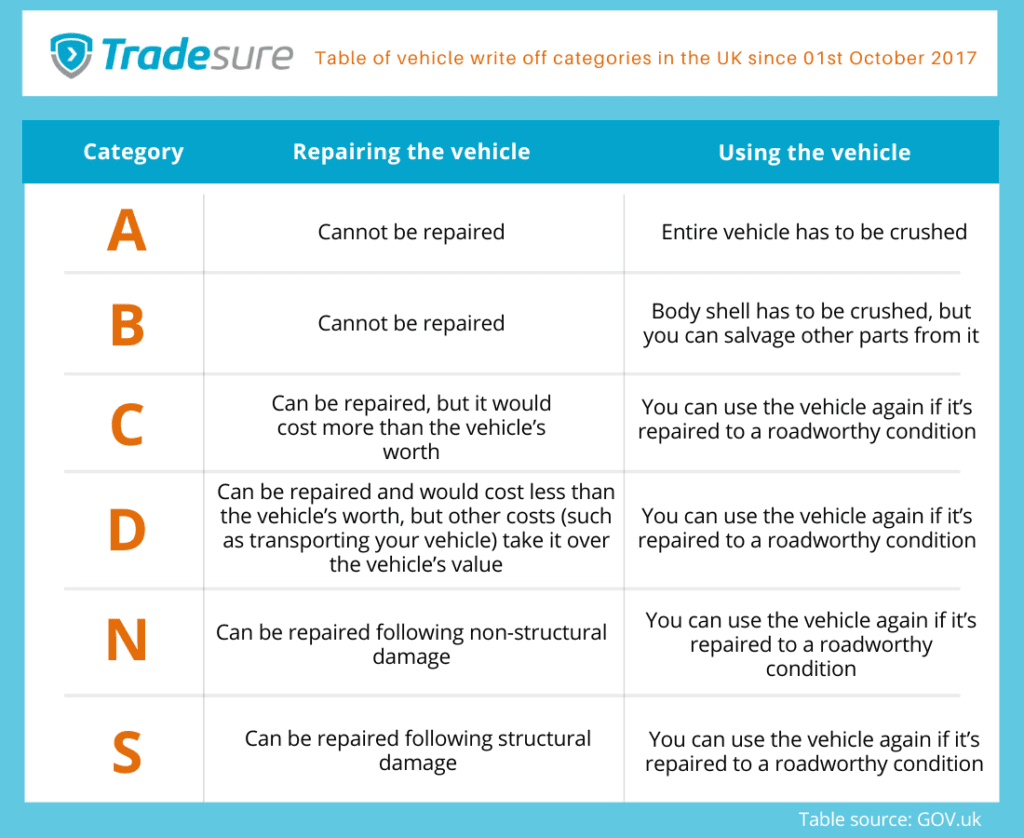
If a car has ever been declared a total loss by an insurer, the ABI records one of four categories. A clean history check shows this immediately. Sellers are legally required to disclose Cat S and Cat N status.
- Cat A: Scrap only. Must be crushed. Never returns to the road.
- Cat B: Body shell destroyed. Salvageable parts only. Never returns to the road.
- Cat S: Structural damage. Repairable and legal to drive after proper repair, but must be disclosed at sale.
- Cat N: Non-structural damage. Repairable and legal, but must be disclosed at sale.
A Cat S or Cat N car typically sells for 20-40% less than a non-categorised equivalent. That discount only makes sense if the repair was done properly and you can see the invoices.
Warranty providers and most finance companies will decline a Cat S or Cat N car outright. Insurers also charge higher premiums, so factor that into your running-cost calculation.
We avoid stocking categorised cars at our Hexham forecourt. If you want a transparent buying experience, our buying service only handles cars with clean histories.
How to research common model-specific faults
Even a clean history report will not tell you about chronic weaknesses in a specific engine or gearbox. Every model has known issues, and five minutes of Google can save you thousands.
Ford EcoBoost 1.0 (Fiesta, Focus, B-Max): Earlier 2012-2017 units suffered coolant loss and head gasket issues linked to the degas pipe. Check for service records showing the updated pipe and a recent coolant test.
Land Rover Ingenium diesels (Discovery Sport, Range Rover Evoque): Watch for excessive oil consumption, timing-chain wear and EGR faults on early 2015-2018 cars.
Volkswagen Group diesel (Dieselgate): Many 2009-2015 EA189 diesels were subject to the emissions recall. Check the car has had the update and confirm there are no running-cost surprises.
Ford PowerShift (2011-2016 Fiesta/Focus): The dry-clutch DPS6 automatic gearbox had a well-documented history of shuddering and control-module failures. Ford extended warranty cover on it in the US. Always test drive thoroughly before buying.
Owner forums, Honest John's "Good and Bad" pages and our car buying myths guide are all useful starting points.
Selling a car in Hexham?
Every car we buy at We Buy Cars Hexham gets a full history check before we make an offer. Start with our free 60-second valuation via the Sell Car Wizard, or see what we have recently paid on our sold page.


About the author
John James is a car buyer based in Hexham who has helped customers across the Tyne Valley navigate vehicle purchases and avoid common pitfalls when buying used cars since 2021.