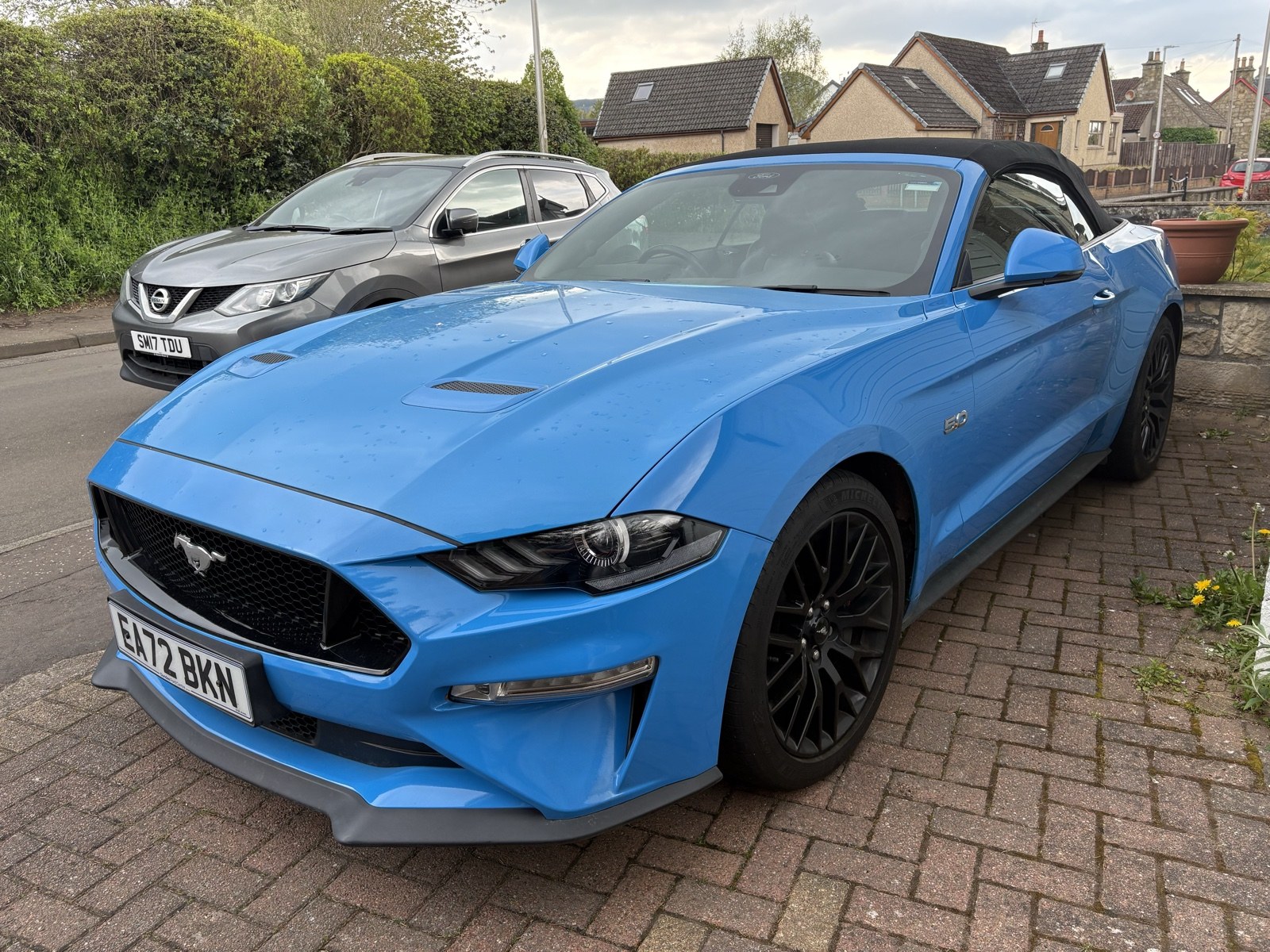
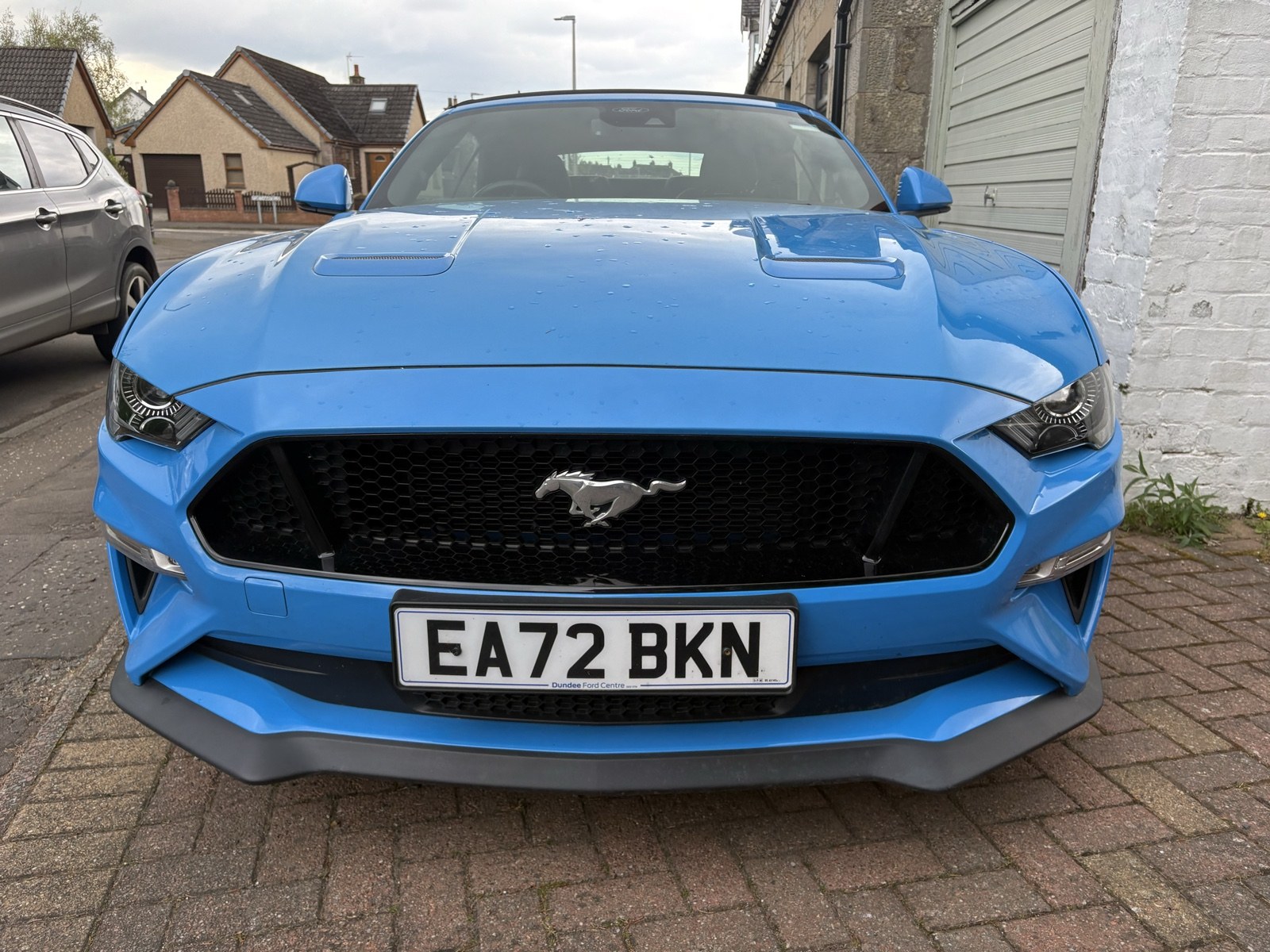
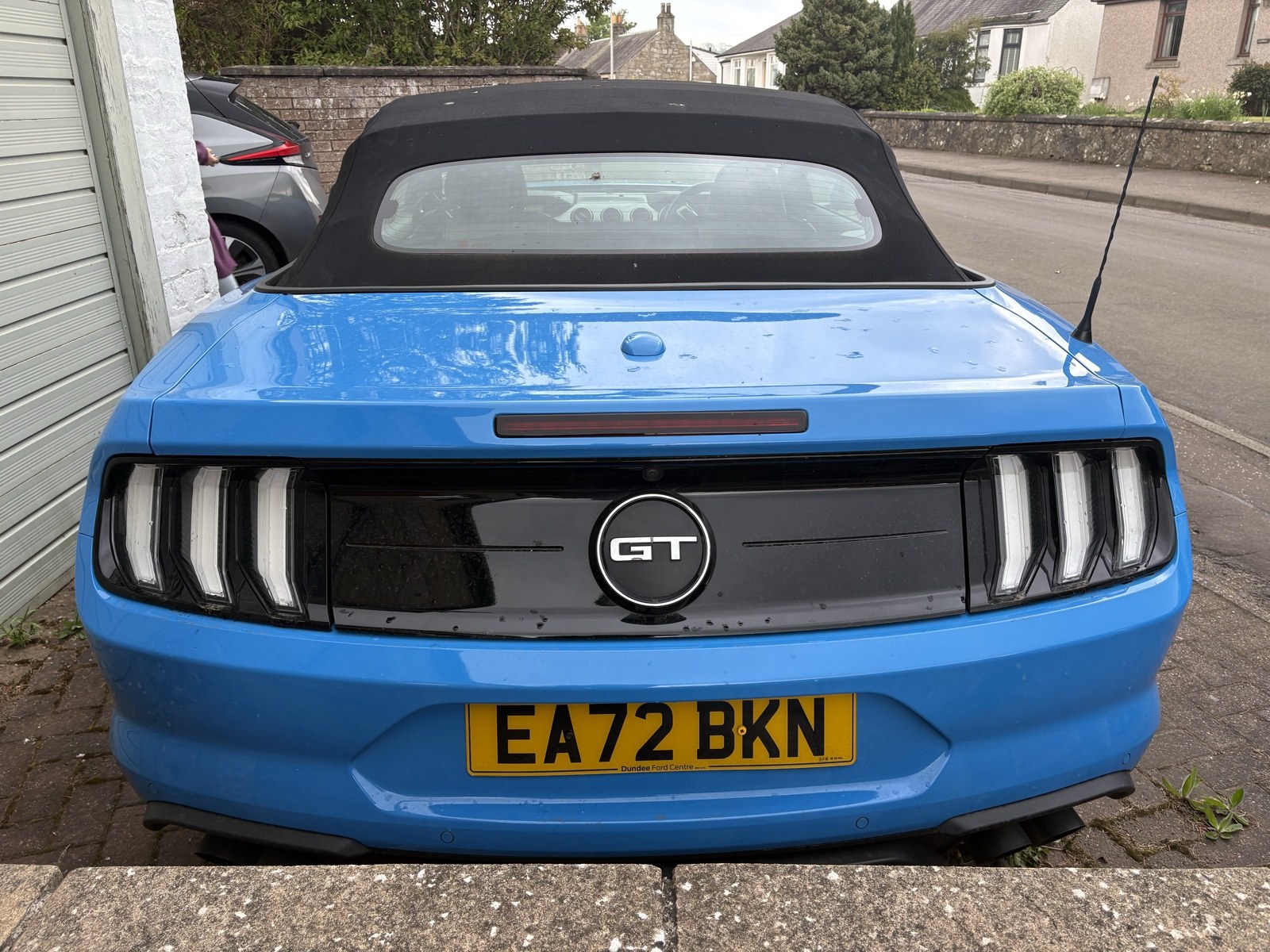
2022 Ford Mustang GT 5.0 V8 Convertible - appraised in Tyne Valley
A near-new blue Ford Mustang GT V8 convertible came our way. We underwrote it, made a firm cash offer, and the main dealer offered a meaningfully better part-exchange figure. The right call for the seller was the dealer's deal, and we said so.
This case study is unusual. We did not buy this car. The seller had been offered a much better part-exchange figure by a main dealer than we could match on a cash sale, and we told them to take that route. We publish stories like this because how we handle a no-deal is at least as informative as how we handle a deal.
A blue Ford Mustang GT 5.0 V8 convertible came our way recently. EA72-plate, low miles, right-hand drive, UK-supplied (not a US import), and in close to showroom condition. Soft top in good shape, leather clean, V8 running properly, no warning lights, no MOT advisories of note.
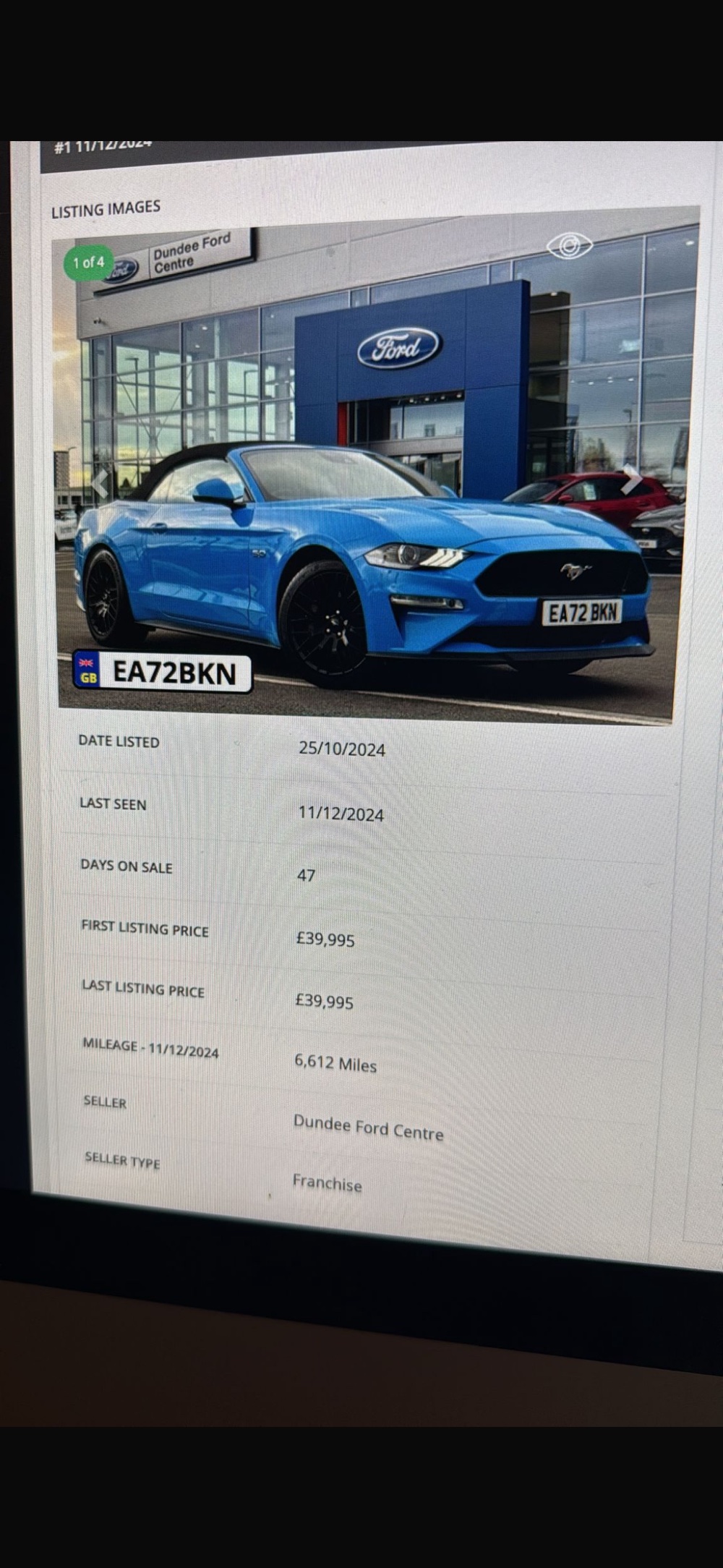
The history was unusual. The car had been gifted to the owner as a birthday present back in October 2024, bought new from a Ford franchise dealer up in Scotland (Dundee Ford Centre, the original listing is below). It has been very lightly used since.
That gifting price was the seller's frame of reference, and it is a fair frame. There is nothing unreasonable about wanting to recover close to what was paid for a car that has been kept in near-showroom condition. The challenge is that the cash-buyer market for a V8 Mustang convertible has its own ceiling, and that ceiling is determined by what the next owner will pay, not by what the original owner paid.
What we did
We did the underwriting properly. Trade-buyer comparables, retail-end comparables, mileage band check, condition allowance for the soft top and the leather, V5 keeper history. We came back with a firm cash offer. It was a real offer, not a low-ball, but it was below what the seller was hoping for, because that is where the cash-buyer market for a clean V8 convertible sits at the moment.
The seller had also been in to a main dealer to look at a new car. The dealer pencilled a part-exchange figure against the new car that was meaningfully better than our cash figure, much closer to what the seller wanted.
We told the seller to take the dealer's deal. It was the right answer for them, and saying so was easy.
Why a main dealer can pay more on a part-exchange
This is the part most private sellers do not realise, and it is worth understanding for anyone in the same position.
A main dealer agreeing a part-exchange against a new car is not valuing your old car the way a cash buyer values it. They are constructing a deal where the new-car margin, the manufacturer bonus for hitting their quarterly registration target, the dealer-finance bonus if the customer takes the PCP, and the VAT-margin scheme on the trade-in all combine into one bottom-line number. They can take a loss on the part-exchange line and still come out ahead overall, because the new-car side carries multiple revenue layers a cash sale of your old car simply does not have.
A low-mileage clean car like this Mustang sweetens that further. A near-new part-exchange car goes back onto the dealer's used forecourt at close to full retail. The dealer is effectively buying their own car back at a known retail price, with no auction risk, no inspection lottery, and no transport cost. That makes it easy to write a generous part-ex figure.
A pure cash buyer like us has none of those levers. We are buying the car on its own merits, in isolation, with no new-car margin to subsidise it, and no captive retail forecourt to sell it back through. So when a part-exchange figure beats our cash figure by a meaningful gap, that is almost always what is going on. It is not that we are stingy or that the seller is being unreasonable. It is that the dealer has a different commercial structure attached to the deal.
When the dealer route is right, and when it is not
The dealer route works well when:
- You actually want the new car. The figures only stack up if you are committing to the new purchase.
- You are willing to take dealer finance. A lot of the dealer's headroom on the part-exchange comes from the finance bonus, and a cash deal on the new car often shrinks the part-exchange figure quietly.
- The dealer has stock pressure or a registration target. End of quarter, end of model year, manufacturer incentive periods all change the part-exchange number a dealer can write.
The cash route works better when:
- You want to walk away with money, not a new car.
- You do not want to deal with finance and the long-term commitment.
- You want to see clearly what your car alone is worth, separately from any new-car discount. (Always ask: what is the new car cash price without the part-ex, and what is the part-ex on its own? The two answers do not always add up to the headline figure.)
This Mustang was a clear case of the dealer route being the better fit. The seller was open to a new car, the maths worked, and we were happy to step back.
Why we publish a deal we did not do
Two reasons. First, this is what we mean when we say independent. A national instant-quote service would have given a number, the seller would have said no, and that would have been the end of it. We did the work, gave a real offer, and when it was clear the dealer route was better we said so. That conversation has more value than a sale.
Second, the part-exchange-versus-cash question is one of the most common decisions any seller makes, and most of the advice online about it is generic. This is a specific case where the part-exchange genuinely beat cash, and the mechanism behind it is worth understanding so you can apply it to your own situation.
If you have a car where you have been quoted both, cash and part-exchange, and the gap is large, the dealer is almost certainly the better route. If the gap is small or non-existent, the cash route is usually cleaner because you keep optionality on what you do next.
Want a second opinion on a part-exchange figure you have been offered? Drop us your registration and a quick description through our valuation wizard and we will tell you straight whether the dealer's number is fair, low, or genuinely better than what a cash buyer can reach.